

 University of Divinity
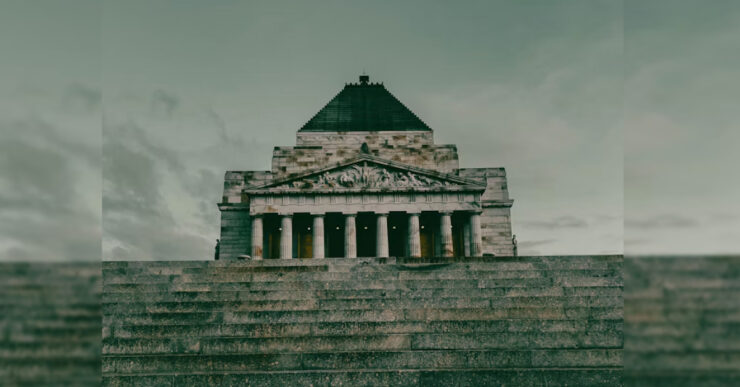
I recently visited Melbourne’s Shrine of Remembrance with a group of students. The structure looked increasingly strange as we approached from the park below. Once we were inside, some of us spoke with a guide who was the niece of an Anzac. She could describe in impressive detail the contents of the shrine’s galleries and, dutifully and accurately, recall the number of Australians killed in various battles during the First World War.
But when I asked about the number of Turkish dead, she looked bemused. During the Gallipoli Campaign, 8,709 Australians died, compared to around 87,000 Ottoman Turkish troops — roughly ten Ottoman dead for every Australian. The moment was neither embarrassing nor surprising. It showed what such shrines tend to do: they do not simply preserve memories, they organise them.
The question, then, is not what the shrine commemorates, but what it makes difficult to remember.
The visit complicated any simple account of the shrine as a monument that consolidates national memory. Two exhibitions were particularly striking in this respect: HERstory, which presents portraits and personal reflections of women who have served in the Australian military; and Sparks in the Dark, which displays embroidery and other artwork by Afghan women, presented by Melbourne-based artist Mursal Azizi and Australian Army veteran Kat Rae. Both exhibitions drew attention, in different ways, to the lasting consequences of war. They widened the field of vision beyond the familiar story of Australian military service.
The Shrine of Remembrance can preserve a powerful national narrative of sacrifice while also providing space for stories that unsettle, complicate and exceed that narrative. It is neither simply a repository of memory nor an uncomplicated instrument of national self-congratulation. It is a site where different memories meet, and where the meaning of remembrance remains contested.

 Whitley College

 Naomi Wolfe


Add comment