

Article by Dr Tom Edwards
Honorary Research Associate (Whitley College), former Counselling Program Director
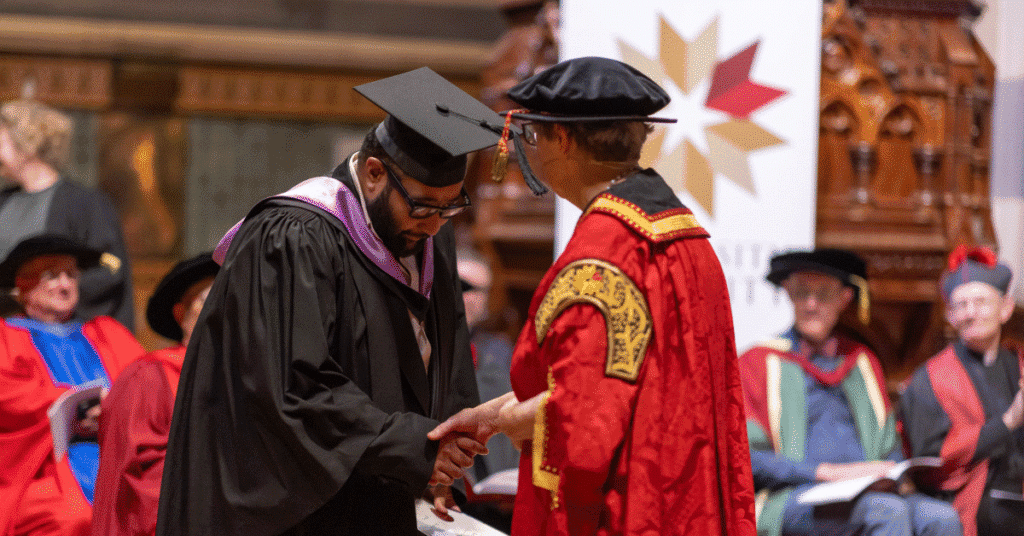
For me, the great joy of being a teacher is two-fold. First, to meet new students, sense what is possible, and to set the conditions for them to flourish. Second, to then sit back and watch what now takes root and grows. Earlier this year, the first cohort of the revised Bachelor of Counselling award graduated from the University of Divinity. Since graduation, many of the graduates have gained employment with notable providers, such as Headspace, set up their own private practices, or are considering further study. One graduate has taken their learning to a world-stage.
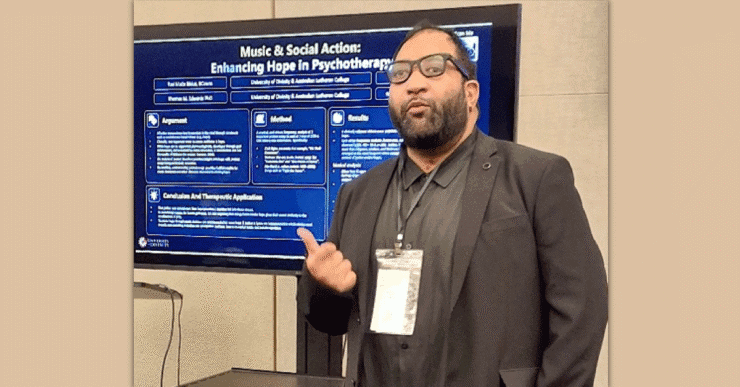
Mr Tusi Matia recently joined me at the 24th World Congress of Psychotherapy, which is held once every three years and whose delegates are predominantly consultant psychiatrists, leading academics, and program heads from all over the world. The 2026 Congress was held in New York, with plenary sessions at the United Nations. From an institutional perspective it was great to showcase what the UD has been doing in the counselling space, and I was particularly delighted to watch Mr Matia present the findings of his third-year research project.
Drawing on his previous degree in music, Mr Matia analysed a series of 20th century protest songs for musical/lyrical elements which spoke of hope. Hope is a virtue fundamental not only to theology, but also to counselling practice. Now combining his two professional loves—music and counselling—Mr Matia is able to assist therapists to construct music-based hope interventions for clients.
I, and his graduate peers, cannot wait to see where he takes this work next.
UD research contributions to the congress:
Edwards, T. M. (2026). Communicating Identity: The Importance of Clothing, Costume, and Dress as a Bi-Directional Visual Semiotic in Therapy. World Congress of Psychotherapy (NYC).
Matia, T., & Edwards T. M. (2026). Music and social action: Lessons for enhancing hope in psychotherapy. World Congress of Psychotherapy (NYC).
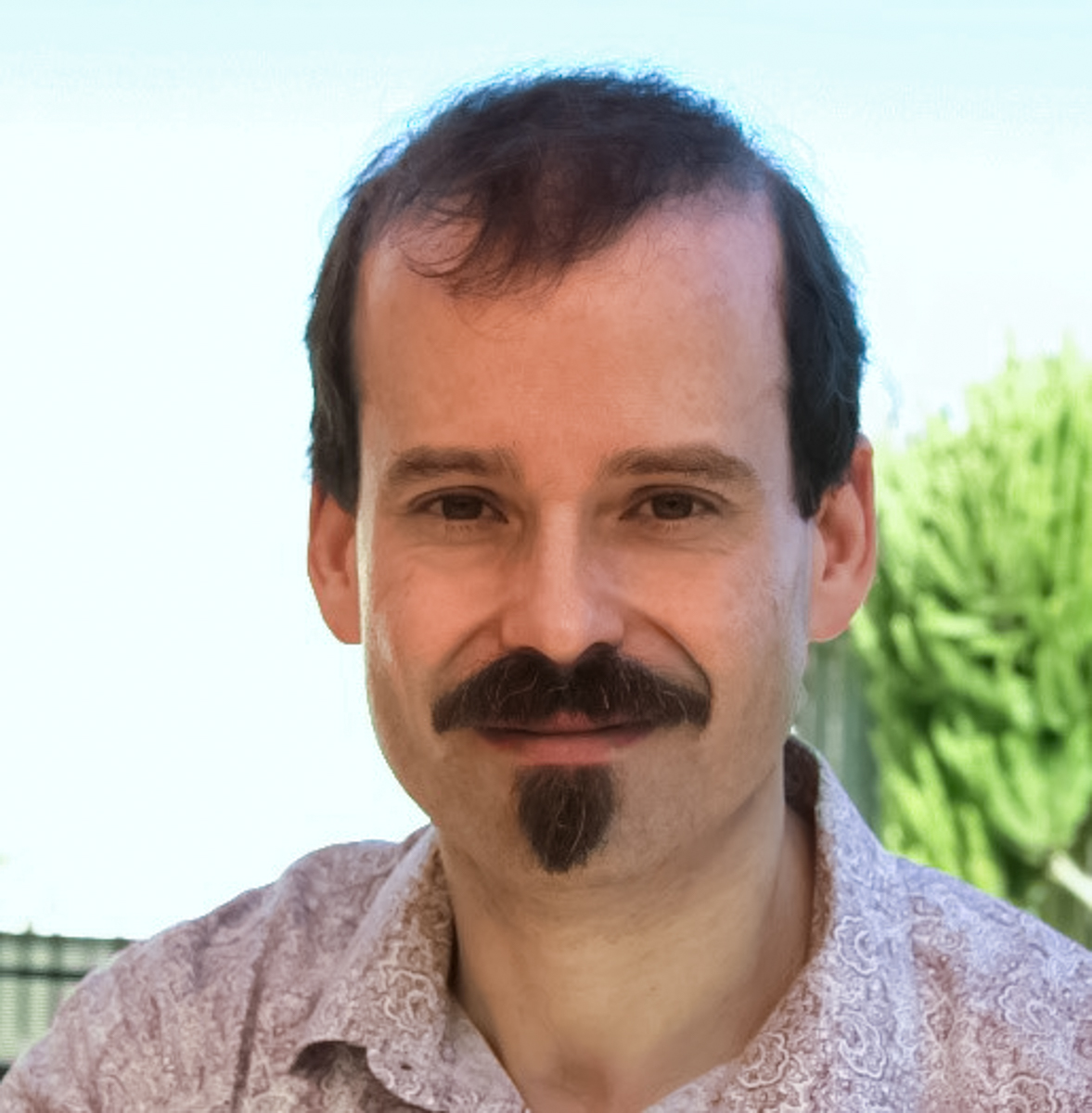
Beginning his career in behavioural neuroscience Dr Tom Edwards has since shifted his academic interests from the brain to the mind. He is particularly interested in a cluster of virtues which contribute to a cognitive architecture that is evolutionarily consistent and socially relevant.
 University of Divinity
 Pilgrim Theological College

 Australian Lutheran College
Add comment