


 University of Divinity
Higher education study in theology is a pathway is rarely chosen for its career prospects, prestige or demand, rather it is often prayerfully discerned or in response to a sense of calling.
Which deep memory stories, traditions and leaders inspire and inform your faith? Which teachers and thinkers have been profoundly impactful on your learning journey so far?

The University of Divinity is home to twelve theological colleges affiliated with different Christian traditions. Our vision, mission, and collegiate identity are represented in our logo, a star, formed by a constellation of open books.
The star is a biblical symbol that appears in the heavens to point wise ones on earth towards the Christ. It is also an Australian symbol, as shown by the federal star and the Southern Cross on the Australian flag.
The books which make up the star represent wisdom, and are open to critical interpretation. The gathering of these many parts into a whole expresses the collegiate shape of the University.
The constellation of books creates two stars, one on the outside and one on the inside, illustrating the University’s commitment to tradition and to innovation. Through critical study, the University brings ancient truths into dialogue with the issues of the contemporary world.
At the time of admission, the University invites prospective students to nominate one of its 12 colleges to be their Home College. One facet of collegiate identity is Christian denomination affiliation (e.g. Anglican, Baptist, Catholic, Coptic Orthodox, Lutheran, Salvation Army, Uniting Church etc). These diverse identities are expressed in a number of ways. VOX invited our Colleges to share some of the stories and figures, who shape or inspire our thinking and practice and influence the beautiful learning environments.
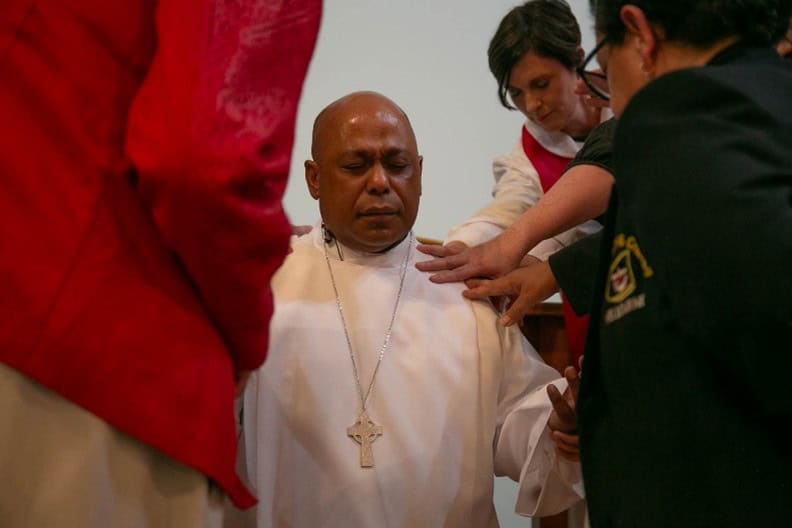
The name Pilgrim Theological College comes from the Uniting Church in Australia’s founding document, the Basis of Union, paragraph 3: “the Church is a pilgrim people, always on the way toward a promised goal”. This reflects a church that moves toward reconciliation with God, our siblings in Christ, and all of Creation.
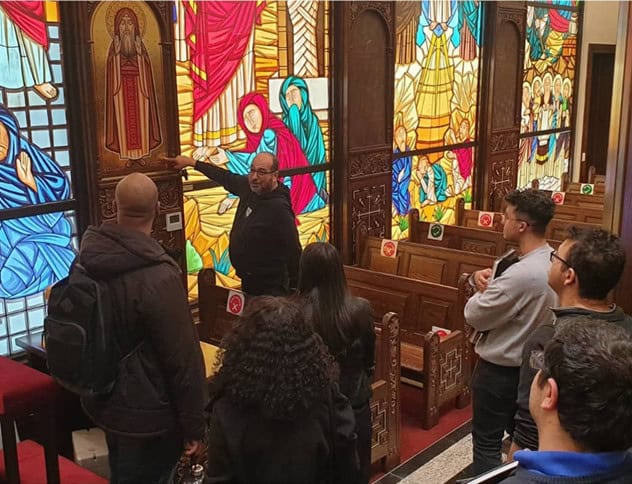
St Athanasius College is named after St Athanasius of Alexandria, who is renowned for upholding Orthodox faith and defending the Scriptural doctrine of Christ. Athanasius stood alongside Alexander during the famous Council of Nicaea to determine the matters of dogma. Over the course of his life, Athanasius was banished five times and spent 17 years of his life in exile for the defence of the doctrine of Christ’s divinity. The College community are committed to maintaining his legacy by upholding Gospel principles for present and future generations. Representations of these can be found in stunning Coptic artistry and woodwork, icons and stained glass, in the chapel, classrooms and student common areas to surround and embed us in this faithful heritage.
Eva Burrows College was named after General Eva Burrows (1929-2015), who was an Australian Salvation Army officer, recognised as the first female Territorial Commander in Australia and the second female to serve as General (international leader of The Salvation Army).
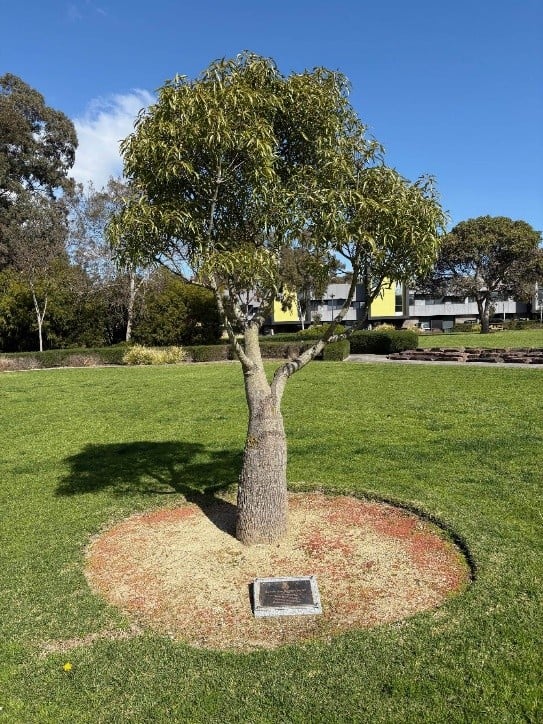
Prior to her commissioning, Eva Burrows was trained as a primary school teacher. She is remembered as an outstanding leader and educator.
This tree (right) was planted in her memory, at the College’s Ringwood campus in Melbourne. It is a baobab tree which can live for over 1000 years. These trees are found in Australia and Africa. The tree is a symbolic link between Eva’s homeland (Australia) with Zimbabwe where Eva served as a teacher for 17 years, and a testament to the enduring influence of a faithful life.
Towards the end of the calendar year, each of our Colleges release their prospectus and timetables for the coming year. We invite you to visit their home pages to explore their 2026 offerings, or search the full suite of units using keywords or the drop-down options in the Unit Management System. Did you know that students at the University of Divinity are able to enrol in units offered by any College within the University (that meet their course requirements), not just your Home College?
These following examples from the Colleges featured in this article are among those units being offered in 2026 that specifically reflect the University’s commitment to honouring both ancient truth and addressing modern issues.
What can we learn from faith communities and religious movements who have collectively worked to address social issues of their day?
Eva Burrows College is Wesleyan and Evangelical in theology. They have a substantial historical Wesleyan collection including magazines, conference proceedings, John Wesley’s sermons, works of John Wesley, biographies of early Methodists and other publications. The publication dates range from the early 1700s to the early 1900s. The collection is not for loan, though an appointment can be made to access the collection. Relating to this extraordinary historical collection, Eva Burrows College will be offering the unit Wesleyan Theology for Today next year, in semester one. Under Wesley’s direction, Methodists became leaders in many social issues of the day, including the abolition of slavery and support for women preachers.
What discipline strengthens and deepens your knowledge of scripture and God that might equip you for care and healing of people and all Creation?
One way Pilgrim Theological College is addressing the question of doing theology on stolen land is via the Church History unit, Respecting Country: Deep history, the colonies, and the church. It’s a unit that equips you to research the history of the land on which you worship – both the deep history of First Nations peoples and the recent story of how the church came to be in that place. We hope that historical understanding and theological reflection will open a pathway to reparative action in consideration of the recommendations of the Yoorrook Justice Commission.
Does your faith and discipleship shape and inform your everyday life?
The question of whether Christian faith remains tenable in the modern world is a subject of ongoing debate. In recent years, increased criticism of religion and Christianity has led some to question its rationality and relevance. St Athanasius College address these questions directly in the unit: Ancient Faith, Modern Questions: Orthodox Apologetics for Today’s World.
Whether it is stories about the need for addressing injustice from our gospel readings or our newspapers, or inspirational leaders and theologians past or present – the study of theology offers connection with, and to, deep memory stories that are transformative to ourselves, our practice, our communities, our neighbourhoods and the wider world.
Is ordination, vocation, a passion for history, an unanswered question, or a hope for the future, calling your name into ministry, research or study? We invite you to join the University of Divinity collegiate community in 2026.
Author: Talitha Fraser, Office of the Vice-Chancellor

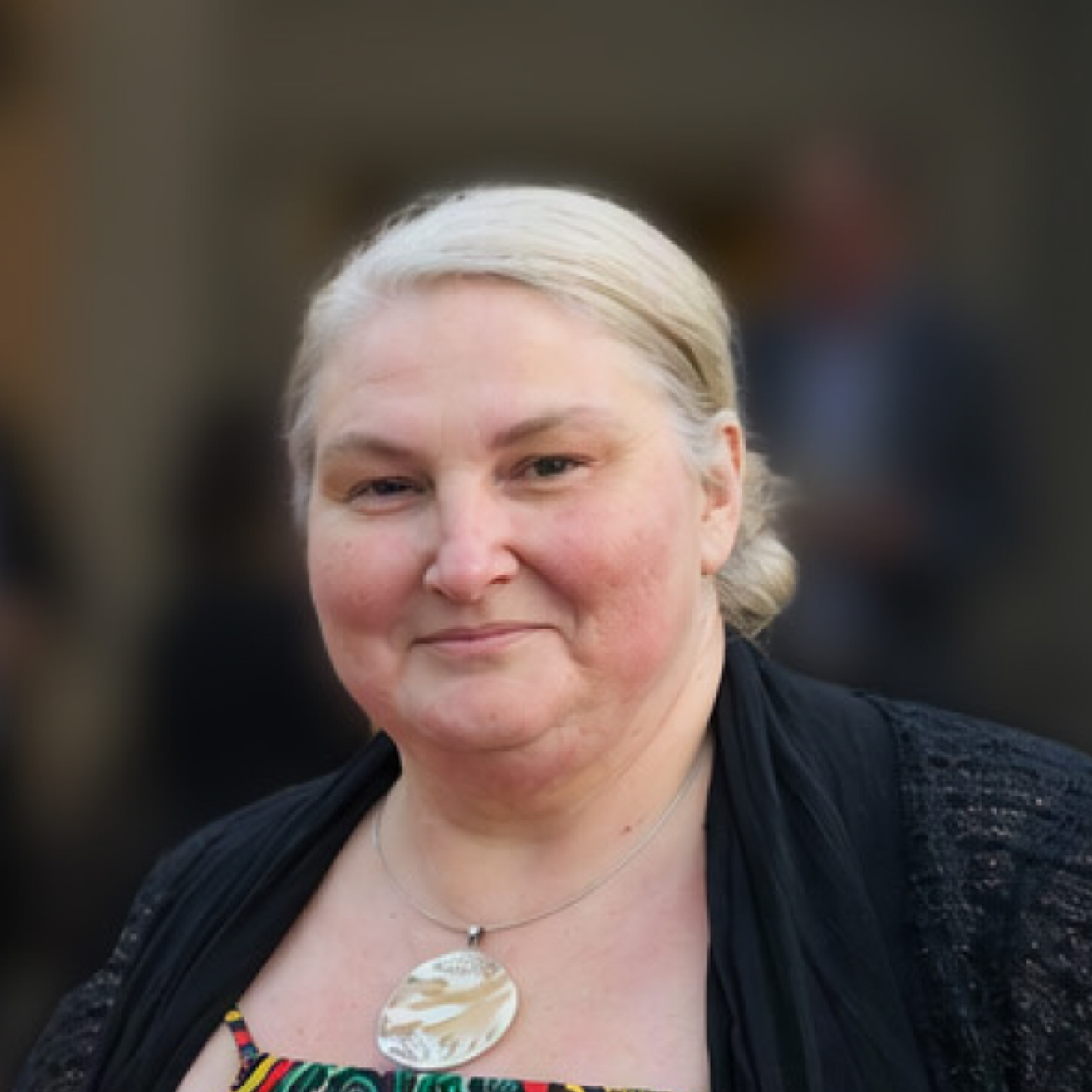 Naomi Wolfe

 Australian Lutheran College
 Eva Burrows College
Add comment